Things to Do While You Wait for Your Car Repair in Indianapolis, IN

Our shop sits right along East Washington Street on the east side of Indianapolis, near the Cumberland area, in a stretch lined with restaurants, shops, a bank, and a park, all within a short walk or quick drive of 12114 E Washington Street. Some repairs only take a few minutes, but others need more time on the lift, whether that is a fast oil change, a brake inspection, or a longer job like transmission service or engine repair. Either way, there is no reason to spend that time staring at our lobby walls. Below are eleven easy ways to make good use of your wait, all within a short distance of our shop. 1. Grab a Slice at Pizza King A local favorite on E Washington St, Pizza King is a solid pick if you are hungry and your vehicle is going to be a while. Whether you dine in or grab a slice to go, it is a quick, casual stop for lunch or dinner without straying far from our shop. 2. Handle a Medical Appointment at Community Physician Network If you have been meaning to schedule a check-up, Community Physician Network, Family Medicine Care – Cumberland is right next door in Suite A. Longer repairs, like brake work or a wheel alignment, give you enough time to fit in an appointment without having to make an extra trip out on a different day. 3. Browse for Deals at Gaskin Fantastic Finds LLC For something a little different, Gaskin Fantastic Finds LLC is a thrift and discount store worth poking around while you wait. Between furniture, home goods, and everyday finds, it is a fun, low-pressure way to pass the time, and you might walk away with a good deal. 4. Pick Up Essentials at Dollar General Dollar General on E Washington St is a convenient stop if you need household items, snacks, or anything else on your list. It is an easy way to knock out a quick errand on foot before heading back for your vehicle, especially if you are only in for a short service. 5. Fill a Prescription at Meijer Pharmacy If you need to refill a prescription or pick up a few everyday essentials, Meijer Pharmacy is close by on E Washington St. It is a practical stop to pair with a shorter service, such as a battery check or an air conditioning service, since you can be in and out quickly. 6. Sit Down for a Meal at Sero’s Family Restaurant For a relaxed, sit-down meal instead of something quick, Sero’s Family Restaurant offers a comfortable diner atmosphere where you can take your time over breakfast, lunch, or dinner while our technicians work through your service. 7. Get Your Coffee Fix at The GREEN Bean If you would rather settle in with a coffee than a full meal, The GREEN Bean is a cozy coffee shop nearby that also doubles as a small local artist market. It is a good spot to catch up on emails, read, or just relax with a warm drink, though it is worth noting the shop closes in the early afternoon and is not open on Mondays or Tuesdays, so it works best if you are dropping off your vehicle for a morning appointment. 8. Pick Up a Sweet Treat at Nothing Bundt Cakes If your visit happens to land around a birthday or you just want something sweet, Nothing Bundt Cakes is a short drive down E Washington St. It is open seven days a week with a full slate of Bundtlets and Bundtinis, making it an easy stop whether your service takes twenty minutes or a couple of hours. 9. Swing Through Culver’s Culver’s on E Washington St is another easy option if you are craving a burger, cheese curds, or some frozen custard between errands. It is a familiar, no-fuss choice that works well for a shorter wait. 10. Take Care of Banking at GBC Bank GBC Bank’s Cumberland Office is just down the street, making it simple to handle a deposit, cash a check, or speak with someone about a loan while your vehicle is being serviced instead of squeezing in a separate trip later. 11. Get Some Fresh Air at Lions Park If the weather is nice, Lions Park on N Buck Creek Rd is a great place to get outside, take a walk, or just sit and relax away from the shop for a bit. It is a nice change of pace if you have been running errands all morning and want a quiet break before heading back. Auto Repair You Can Count On As a family-owned business and a certified NAPA AutoCare Gold Center, Discount Auto Repair Inc has proudly served Indianapolis and the surrounding communities since 2012. That combination means you get the backing of a nationally recognized network along with the personal attention of a local shop, whether your vehicle needs cooling system service, electrical diagnostics, or routine maintenance to keep small issues from turning into bigger ones. Have questions about your repair, or want to see the full range of services we offer? Visit our services page, check out our blogs for maintenance tips, or contact us directly. You can also reach our team by phone at (317) 894-4000, and we will let you know how long your visit is expected to take so you can plan accordingly.
Signs It’s Time to Replace Your Car Air Filter

Most drivers in Indianapolis think about oil changes, tire rotations, and brake inspections. The air filter? It barely crosses anyone’s mind – until something goes wrong. But here is the thing: your engine depends on clean airflow to run properly. When that flow gets blocked, everything from fuel economy to engine performance starts to suffer. What an Air Filter Actually Does Your car’s engine needs a precise mix of air and fuel to combust efficiently. The air filter sits at the intake, catching dirt, debris, dust, and particulate matter before any of it reaches the engine. Think of it as a gatekeeper. Every time you drive your truck, van, or car through Indianapolis traffic or dusty roads, that filter is working to keep contaminants out of your engine’s most sensitive components. Signs Your Air Filter Needs Replacing A clogged or dirty air filter does not always trigger a dramatic breakdown. More often, it quietly drags down your vehicle’s performance over time. Here are the warning signs worth paying attention to: Reduced fuel economy – When airflow is restricted, your engine compensates by burning more fuel. If your gas mileage has dropped noticeably, a dirty filter could be the reason. Sluggish acceleration – A starved engine struggles to respond. If your car hesitates when you press the gas, restricted intake airflow may be to blame. Check engine light – A clogged filter can trigger the check engine light by affecting the air-to-fuel ratio and exhaust gas readings. Visible dirt on the filter – A new filter is white or off-white. A filter covered in gray or black debris is overdue for a swap. Unusual engine sounds – Coughing or sputtering at startup can indicate the engine is not getting enough clean air. How Often Should You Replace a Car Air Filter? Most manufacturers recommend replacing your air filter every 15,000 to 30,000 miles. However, that range shifts depending on your driving conditions. If you frequently drive in heavy Indianapolis traffic, on gravel roads, or in areas with higher air pollution and airborne dust, your filter will clog faster than the standard estimate suggests. A quick visual inspection during your next oil change can tell you a lot. What Happens When You Ignore It Too Long Neglecting your air filter is not just an inconvenience – it leads to real mechanical problems over time. Restricted airflow means your engine works harder to pull in air. That extra strain affects fuel economy in automobiles, accelerates engine wear, and, in severe cases, can force contaminants past the filter and into the engine itself. Replacing a filter costs very little compared to the engine repair bills that can follow from ignoring one. Why It Matters for Your Fuel Economy Fuel economy in automobiles is directly tied to how efficiently your engine breathes. A clean filter allows air to move freely through the intake duct, supporting the proper combustion your engine needs. A clogged filter chokes that process. Studies and manufacturer data consistently show that a dirty air filter can reduce fuel efficiency and increase emissions. For everyday drivers, that means spending more at the pump for no reason. Getting It Checked in Indianapolis Whether you drive a car, truck, or van around Indianapolis, having your air filter inspected regularly is simple preventive maintenance that pays off. A trained technician can check the condition of your filter during a routine service visit and let you know whether it needs replacing. When to Replace Your Car Air Filter A dirty air filter is one of the easiest problems to fix – and one of the most overlooked. It affects your fuel economy, your engine’s health, and even the air quality inside your vehicle. If you cannot remember the last time yours was replaced, that is reason enough to get it checked. Schedule your next service visit with Discount Auto Repair Inc by calling 317-894-4000, or learn more about keeping your engine in top shape by exploring our engine repair services.
Car AC Not Blowing Cold Air? It Might Be the Compressor
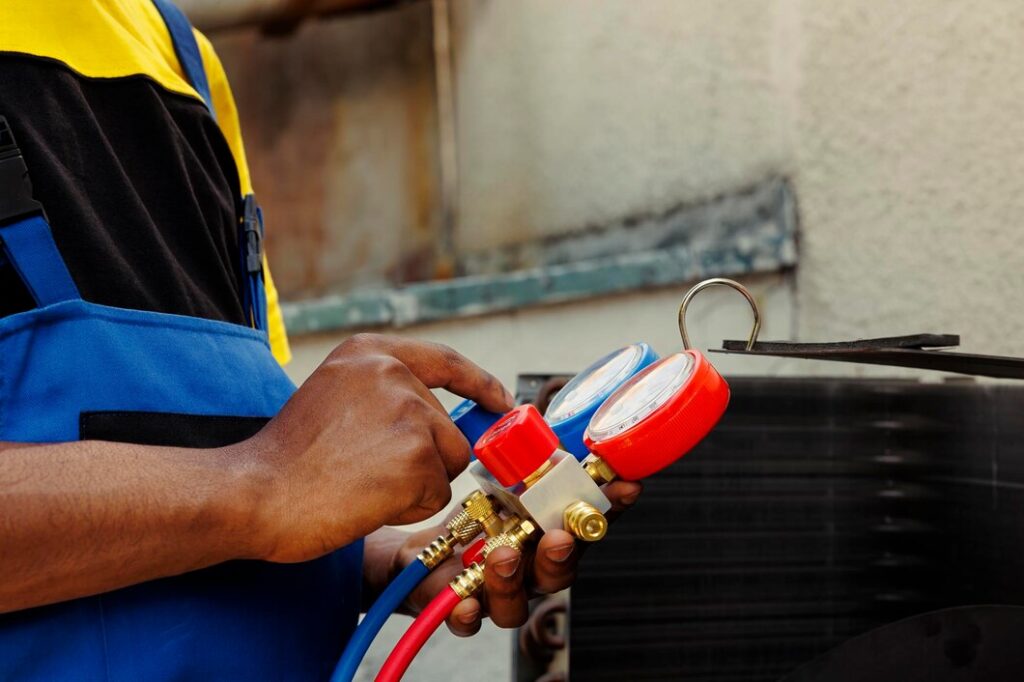
There is nothing quite as frustrating as cranking up your car’s air conditioning on a hot Indianapolis summer day, only to feel warm air blowing back at you. Before you assume the worst, let’s talk about what is actually going on. In most cases, the culprit behind your car AC not blowing cold air is the compressor, and understanding why can save you time, money, and a lot of unnecessary guesswork. What Does the AC Compressor Actually Do? The compressor is the heart of your vehicle’s automotive air conditioning system. It pressurizes the refrigerant, which is the substance responsible for absorbing heat from inside your car and releasing it outside. Without a working compressor, the entire cooling cycle breaks down. Think of it like this: the compressor takes low-pressure refrigerant gas, compresses it into a high-pressure liquid, and pushes it through the system toward the condenser. From there, the refrigerant moves through the thermal expansion valve, into the evaporator, and eventually cools the air that blows into your cabin. If the compressor fails, none of that happens. Common Reasons the Compressor Stops Working The Compressor Clutch Is Not Engaging Your AC compressor uses a clutch to connect and disconnect from the engine’s power supply. If the clutch fails, the compressor cannot spin, and your system produces zero cold air. A bad fuse, a failing switch, or a worn clutch plate can all prevent engagement. This is one of the most common reasons drivers in Indianapolis notice their AC suddenly stops cooling. Low Refrigerant Due to a Leak A refrigerant leak is another leading cause of compressor trouble. When refrigerant, sometimes still referred to as Freon, drops below the required pressure level, the compressor can overheat or shut down entirely to prevent damage. Leaks can develop from small cracks in hoses, a damaged condenser, or even moisture-related acid buildup inside the system over time. Low refrigerant is not just a comfort issue. Running a system low on refrigerant forces the compressor to work harder, which accelerates wear and can lead to total compressor failure. Moisture and Contamination Inside the System Moisture entering your AC system is a serious problem. It reacts with refrigerant to form acid, which corrodes internal components, including the compressor, evaporator, and lines. Contaminated oil inside the system also reduces lubrication, causing parts to wear down faster. This kind of internal damage is often invisible until the system completely stops working. That is why routine AC service matters, not just a recharge. Overheating Near the Engine Your car’s AC system sits close to the engine and radiator. Excessive engine heat can affect the performance of the compressor and other components. If your cooling system is also struggling, it can compound the problem and make your AC feel like it is barely functioning. A properly working radiator and cooling system are essential to keeping your AC running efficiently, especially during peak summer heat. Other AC Components That Get Blamed But Are Often Fine When your car’s AC is not blowing cold air, it is easy to assume the problem is something simple like a dirty air filter or a weak fan. While airflow issues can reduce how cool the air feels inside, they rarely explain why the air is warm in the first place. Similarly, some drivers wonder if a weak electric battery could affect AC performance. It can play a role, especially in vehicles with electronically controlled systems, but a failing compressor or refrigerant leak is far more likely to be the root cause. Why You Should Not Ignore a Failing AC Compressor A compressor that is struggling will not fix itself. Left unaddressed, it can send metal debris through your AC system, contaminating the condenser, evaporator, and lines. At that point, what could have been a compressor replacement becomes a full system overhaul. It is also worth noting that some shops, including quick-service chains, will simply recharge your refrigerant without diagnosing the underlying problem. A recharge on a leaking system is a temporary fix at best. A proper diagnosis looks at pressure readings, clutch operation, refrigerant levels, and the overall condition of system components. What a Real AC Diagnosis Looks Like A qualified technician will use pressure gauges to test the system, inspect for refrigerant leaks, check the compressor clutch, and evaluate connected components like the condenser and evaporator. They will also check for moisture contamination and assess whether the system oil needs to be replaced. This kind of thorough inspection is what separates a real repair from a patch job. How to Handle Car AC Not Blowing Cold Air If your car’s AC is not blowing cold air, do not wait it out or settle for a quick recharge that masks the real problem. The compressor is almost always involved, and catching the issue early can protect the rest of your system from costly damage. At Discount Auto Repair Inc., our ASE-certified technicians provide honest diagnoses and dependable repairs for drivers throughout Indianapolis. Call us at 317-894-4000 or learn more about our auto AC services to schedule your inspection today.
Ignore That Bumpy Ride: Signs of Car Suspension Problems

Every car hits a rough patch now and then. But if your vehicle feels like it’s riding on cobblestones even on a smooth road, that’s not normal wear and tear you should brush off. Your car suspension is one of the most important systems keeping you safe, stable, and in control. When suspension problems go ignored, small issues turn into expensive repairs fast. Knowing what to look and listen for can save you money and keep your vehicle performing the way it should. What Does Your Car Suspension Actually Do? Your car’s suspension system connects the wheels to the chassis and absorbs force from the road surface. It keeps your tires in contact with the pavement while smoothing out bumps, potholes, and uneven terrain. The system includes several key components: shock absorbers, struts, control arms, anti-roll bars, and bearings. Each one plays a role in how your car handles turns, stops, and accelerates. When one part fails, it can affect the performance of everything else around it. Think of your suspension as the buffer between the road and the rest of your vehicle. Without it working properly, every bump transfers directly to your chassis and your passengers. Common Signs of Car Suspension Problems You Should Not Ignore Your Ride Feels Rougher Than Usual This is often the first sign drivers notice. If every pothole or speed bump feels jarring, or if the car seems to bounce and sway more than it used to, your shock absorbers or struts may be wearing out. A simple test: press down hard on the front hood of your car and release. If the vehicle bounces more than once or twice, that points to a shock absorber problem worth getting checked. The Car Pulls to One Side While Driving If you have to constantly correct your steering to keep the car going straight, your suspension could be the cause. This symptom can also point to a wheel alignment issue or uneven tire wear. Do not assume this is just a steering problem. Misaligned wheels, worn control arms, or a damaged anti-roll bar can all create that drifting sensation. Ignoring this can increase the risk of a traffic collision, especially at higher speeds. Nose Diving, Squatting, or Rolling When you brake hard, and the front of your car dips sharply forward, that is called nose diving. If the rear sinks down when you accelerate, that is squatting. Both are signs that the shocks and struts are no longer managing weight distribution the way they should. Body roll during turns, where your car leans heavily to one side, is another red flag. These are not just comfort issues. They affect your ability to control the vehicle in an emergency. Uneven Tire Wear Your tires can tell you a lot about what is happening underneath your car. When the suspension is damaged, it can cause tires to make inconsistent contact with the road, leading to uneven tire wear. Look at your tires regularly. If you notice bald patches, scalloping, or wear that is heavier on one edge, bring your vehicle in for an inspection. This kind of wear also shortens the life of your tires and can affect braking performance. Unusual Noise While Driving Clunking, knocking, or creaking noises when you go over bumps or make turns are classic signs of suspension trouble. These sounds often come from worn bearings, loose struts, or failing control arms. Do not tune out unusual noise. What starts as a minor rattle can quickly escalate if the part fails completely. Hearing a grinding sound near a wheel could also point to a brake issue that needs immediate attention. Difficulty Steering or a Loose Steering Wheel If your steering wheel feels loose, slow to respond, or difficult to turn at low speeds, do not assume it is only a power steering problem. Suspension components like the control arms and struts directly affect how your steering behaves. Low hydraulic fluid levels can impact power steering performance, but if fluid levels are fine and steering still feels off, your suspension needs a closer look. Visible Damage or Leaking Fluid Sometimes the signs are right in front of you. If you spot leaking hydraulic fluid near a wheel or shock absorber, or if you can see that a strut looks bent or damaged, that is a clear signal your suspension needs repair. Oil or fluid on your driveway under the front or rear wheels is worth investigating immediately. Never ignore an unusual odor either. Burning fluid smells near your wheels after driving can indicate a serious problem. How Suspension Problems Affect Other Systems Suspension issues rarely stay contained. A worn shock absorber puts extra stress on your tires, causing faster wear. Poor wheel alignment can strain your steering components. Damaged control arms can affect brake performance and front-wheel drive or rear-wheel drive systems alike. Think of your vehicle as a network. When one part breaks down, others compensate and eventually wear faster. A routine inspection can catch problems before they spread and cost you significantly more. What Does a Suspension Inspection Involve? When you bring your car in for a suspension inspection, a qualified technician will check each major component of the system. This includes the shock absorbers, struts, control arms, anti-roll bars, wheel bearings, and related hardware. They will also look for signs of uneven tire wear, check your wheel alignment, and test the vehicle’s response during a test drive. At Discount Auto Repair Inc., ASE-certified technicians use modern diagnostic technology to identify both obvious and hidden suspension issues. When Should You Schedule a Suspension Inspection? Do not wait until the problems become severe. If your car is showing any of the signs mentioned above, schedule an inspection soon. Routine maintenance is also a good opportunity to ask your technician to check suspension components while the vehicle is already up on the lift. As a certified NAPA AutoCare Center, Discount Auto Repair Inc. backs qualifying repairs with the NAPA AutoCare Peace of Mind Warranty,
What Is Included In A Car Diagnostic Test

If your check engine light just came on, or your car has been acting strange lately, you’ve probably heard someone mention a diagnostic test. But what exactly happens during one? What are the mechanics actually looking for? Think of it like a medical test for your vehicle. Just like a doctor uses a medical device to check your vitals and a medical diagnosis to figure out what’s wrong, a car diagnostic test uses specialized tools and software to read the information your vehicle’s computer is sending. It’s not guesswork. It’s data. What Is a Car Diagnostic Test, Really? A car diagnostic test is a digital inspection of your vehicle’s onboard systems. Every modern car, truck, and SUV is built with an on-board diagnostics system – often called OBD-II – that constantly monitors performance across dozens of components. When something goes wrong, the system logs a fault code. A technician connects a scan tool, sometimes called a code reader in the automotive industry, to a port usually found beneath your dashboard. That tool pulls the stored codes from the vehicle’s central processing unit and translates them into readable information. This gives the mechanic a starting point, not a final answer. The codes tell them where to look, not always exactly what to fix. What Systems Does the Diagnostic Cover? This is where many drivers are surprised. A car diagnostic test doesn’t just check your engine. It pulls data from multiple systems across the vehicle. Engine and Powertrain The engine is the most common focus. The scan tool checks for issues with fuel injection, the ignition system, the oxygen sensor, throttle response, and overall fuel efficiency. Problems in these areas often affect performance and gas mileage before they become serious mechanical failures. The powertrain – which includes the transmission – is also checked. Transmission codes can reveal slipping, overheating, or sensor failures that are easier and cheaper to fix early. Brakes and Chassis The diagnostic system can flag issues with your brake system, including the anti-lock braking sensors. It also checks chassis and car suspension data, which matters for how safely your vehicle handles on the road. These aren’t always things you can feel right away. That’s exactly why the inspection is valuable. Electrical and Safety Systems Modern vehicles rely heavily on electrical components. The diagnostic test checks your airbag system, also known as the supplemental restraint system, along with other safety-related sensors and circuits throughout the vehicle. Faulty airbag codes are not something to ignore. If that system fails when you need it, the consequences for every passenger in the vehicle could be severe. Emissions and Exhaust The exhaust system is tied directly to your emissions performance. The diagnostic checks how well your vehicle is burning fuel and whether the exhaust system is functioning properly. A failing oxygen sensor, for example, can hurt fuel efficiency and cause your vehicle to fail an emissions inspection. HVAC and Comfort Systems Yes, even your heating, ventilation, and air conditioning system is part of the diagnostic check. Comfort matters, especially during Indianapolis winters and hot summers. If your HVAC system has an electrical fault or a sensor issue, the scan tool can often catch it before it becomes a full breakdown. What Happens After the Diagnostic? Once the technician pulls the codes and reviews the data, they perform a hands-on inspection to confirm the diagnosis. The codes narrow it down, but experienced mechanics use their training and judgment to verify the actual root cause. At Discount Auto Repair Inc., the ASE-certified technicians walk you through what was found before any work begins. There are no surprises and no pressure. You get a clear picture of what your vehicle needs and what it will cost. This approach saves you money in the long run. Catching a small issue – like a failing sensor or a minor ignition system problem – before it damages other components is almost always less expensive than waiting. Is a Car Diagnostic Test Worth It? Brands like Volvo and others design their vehicles with sophisticated onboard systems because early detection prevents costly repairs. That same logic applies to any car or truck on the road. If your check engine light is on, your vehicle is running rough, your fuel economy has dropped, or you’re hearing something unfamiliar, a diagnostic test is the right first step. Skipping it and guessing at repairs wastes money and time. Unlike a quick check at a parts store, a professional diagnostic at an automobile repair shop gives you a complete picture. The software, the scan tool, and – most importantly, the trained technician interpreting it all make a significant difference. What to Know Before Your Car Diagnostic Test A car diagnostic test is one of the smartest maintenance moves you can make as a vehicle owner. It takes the guesswork out of car care and gives your mechanic real data to work with. If your check engine light is on or something feels off, don’t wait. Schedule an engine repair service with Discount Auto Repair Inc. in Indianapolis, or call us at 317-894-4000 to set up your diagnostic appointment today.