There is nothing quite as frustrating as cranking up your car’s air conditioning on a hot Indianapolis summer day, only to feel warm air blowing back at you. Before you assume the worst, let’s talk about what is actually going on. In most cases, the culprit behind your car AC not blowing cold air is the compressor, and understanding why can save you time, money, and a lot of unnecessary guesswork.
What Does the AC Compressor Actually Do?
The compressor is the heart of your vehicle’s automotive air conditioning system. It pressurizes the refrigerant, which is the substance responsible for absorbing heat from inside your car and releasing it outside. Without a working compressor, the entire cooling cycle breaks down.
Think of it like this: the compressor takes low-pressure refrigerant gas, compresses it into a high-pressure liquid, and pushes it through the system toward the condenser. From there, the refrigerant moves through the thermal expansion valve, into the evaporator, and eventually cools the air that blows into your cabin. If the compressor fails, none of that happens.
Common Reasons the Compressor Stops Working
The Compressor Clutch Is Not Engaging
Your AC compressor uses a clutch to connect and disconnect from the engine’s power supply. If the clutch fails, the compressor cannot spin, and your system produces zero cold air. A bad fuse, a failing switch, or a worn clutch plate can all prevent engagement. This is one of the most common reasons drivers in Indianapolis notice their AC suddenly stops cooling.
Low Refrigerant Due to a Leak
A refrigerant leak is another leading cause of compressor trouble. When refrigerant, sometimes still referred to as Freon, drops below the required pressure level, the compressor can overheat or shut down entirely to prevent damage. Leaks can develop from small cracks in hoses, a damaged condenser, or even moisture-related acid buildup inside the system over time.
Low refrigerant is not just a comfort issue. Running a system low on refrigerant forces the compressor to work harder, which accelerates wear and can lead to total compressor failure.
Moisture and Contamination Inside the System
Moisture entering your AC system is a serious problem. It reacts with refrigerant to form acid, which corrodes internal components, including the compressor, evaporator, and lines.
Contaminated oil inside the system also reduces lubrication, causing parts to wear down faster.
This kind of internal damage is often invisible until the system completely stops working. That is why routine AC service matters, not just a recharge.
Overheating Near the Engine
Your car’s AC system sits close to the engine and radiator. Excessive engine heat can affect the performance of the compressor and other components. If your cooling system is also struggling, it can compound the problem and make your AC feel like it is barely functioning.
A properly working radiator and cooling system are essential to keeping your AC running efficiently, especially during peak summer heat.
Other AC Components That Get Blamed But Are Often Fine
When your car’s AC is not blowing cold air, it is easy to assume the problem is something simple like a dirty air filter or a weak fan. While airflow issues can reduce how cool the air feels inside, they rarely explain why the air is warm in the first place.
Similarly, some drivers wonder if a weak electric battery could affect AC performance. It can play a role, especially in vehicles with electronically controlled systems, but a failing compressor or refrigerant leak is far more likely to be the root cause.
Why You Should Not Ignore a Failing AC Compressor
A compressor that is struggling will not fix itself. Left unaddressed, it can send metal debris through your AC system, contaminating the condenser, evaporator, and lines. At that point, what could have been a compressor replacement becomes a full system overhaul.
It is also worth noting that some shops, including quick-service chains, will simply recharge your refrigerant without diagnosing the underlying problem. A recharge on a leaking system is a temporary fix at best. A proper diagnosis looks at pressure readings, clutch operation, refrigerant levels, and the overall condition of system components.
What a Real AC Diagnosis Looks Like
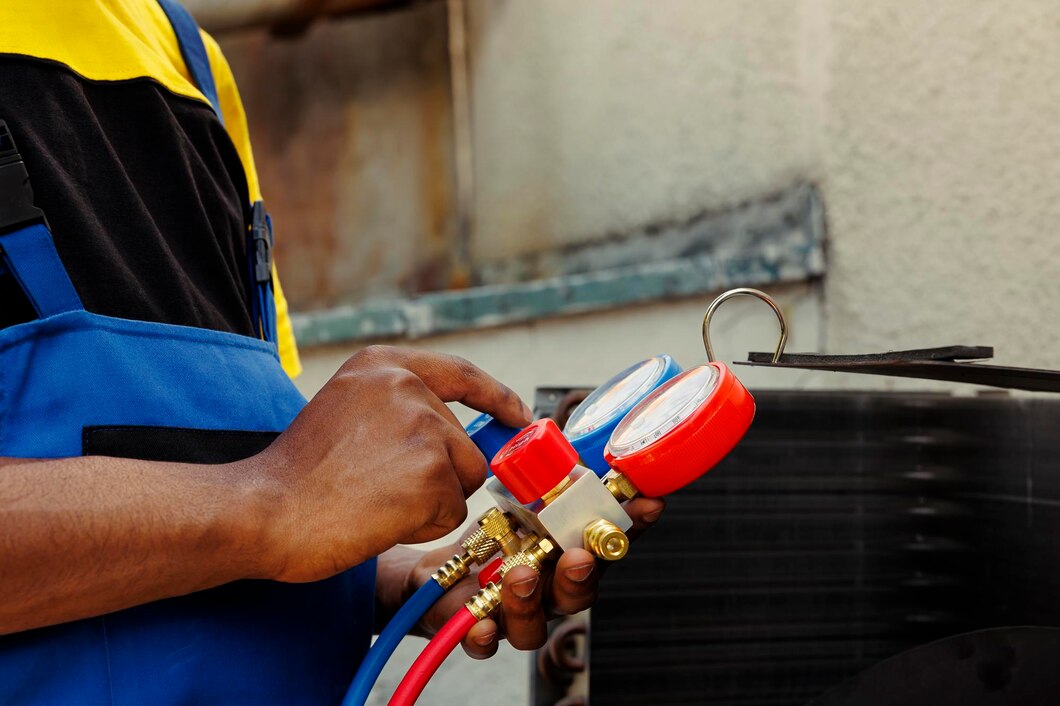
A qualified technician will use pressure gauges to test the system, inspect for refrigerant leaks, check the compressor clutch, and evaluate connected components like the condenser and evaporator. They will also check for moisture contamination and assess whether the system oil needs to be replaced.
This kind of thorough inspection is what separates a real repair from a patch job.
How to Handle Car AC Not Blowing Cold Air
If your car’s AC is not blowing cold air, do not wait it out or settle for a quick recharge that masks the real problem. The compressor is almost always involved, and catching the issue early can protect the rest of your system from costly damage. At Discount Auto Repair Inc., our ASE-certified technicians provide honest diagnoses and dependable repairs for drivers throughout Indianapolis. Call us at 317-894-4000 or learn more about our auto AC services to schedule your inspection today.